
An honest developer's comparison of Gutenberg and Elementor in 2026. Performance, flexibility, lock-in, and when each one actually makes sense.
I built WordPress sites with Elementor for years. I know it well. I know what it is good at and I know where it falls apart.
I also build with Gutenberg now — custom blocks, FSE themes, block patterns. I know that well too.
This is not a post written by someone who tried Elementor once and decided it was bad. This is a comparison from someone who has used both seriously, on real client projects, and has a clear opinion about which one I reach for in 2026 and why.
What Elementor Actually Gets Right
Let's start here because most Gutenberg advocates skip it and that makes their argument weaker.
Elementor is genuinely good at a few things.
Speed of delivery on simple projects is real. If a client needs a standard brochure site with a hero, some sections, and a contact form, an experienced Elementor developer can have something polished and live faster than a Gutenberg developer building from scratch. The widget library, the pre-built templates, the visual drag and drop — for straightforward projects these are genuine advantages.
The learning curve for non-developers is lower. Elementor's interface is more immediately intuitive than the block editor for people who are new to WordPress. A client who wants to edit their own site after handoff may find Elementor easier to navigate at first.
The ecosystem is large. Thousands of third party widgets, templates, and integrations exist for Elementor. If you need something specific there is usually an Elementor addon for it.
These are real advantages and I will not pretend they are not.
Where Elementor Falls Apart
Performance
This is the most measurable difference between the two and the numbers are not close.
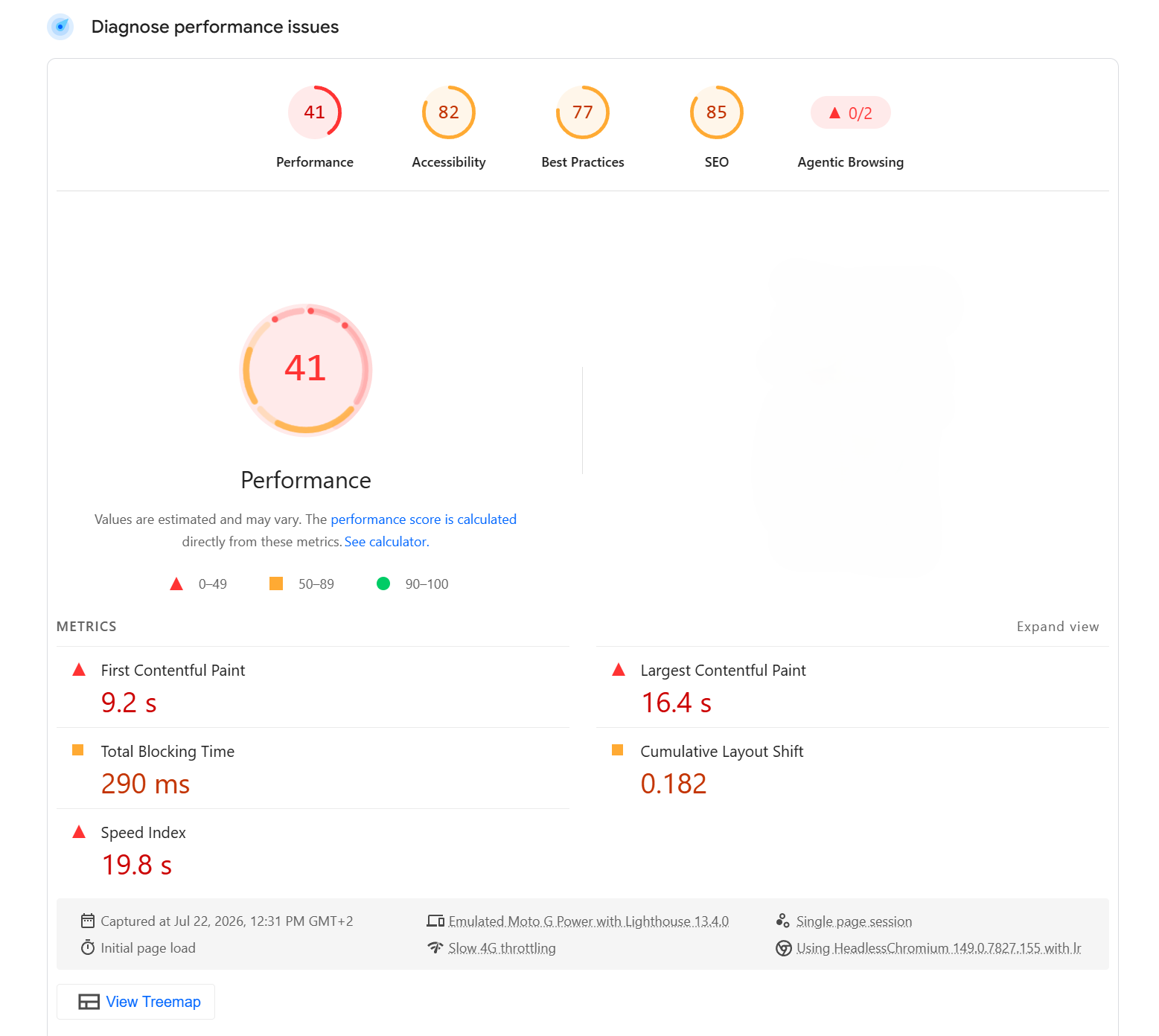
A performance score of 41. First Contentful Paint at 9.2 seconds. Largest Contentful Paint at 16.4 seconds. This is a real site tested in 2026, not a worst case scenario constructed to make a point. This is what an average Elementor site looks like under a real performance audit.
Elementor loads its entire asset library on every page regardless of what you are actually using. Every page gets hundreds of kilobytes of CSS and JavaScript that may have nothing to do with the content on that page. This is structural — it is not something you can fully optimise away without fighting against the tool itself.
Core Web Vitals affect search rankings. A site with a 41 performance score is actively being penalised by Google. That is not a theoretical concern for your client, it is a measurable, ongoing cost.
Vendor Lock-in
Every page built in Elementor stores its layout as Elementor shortcodes and proprietary data in the WordPress database. The content is structurally dependent on Elementor being installed and active.
If Elementor changes its pricing — which it has done — your client pays or the site breaks. If the plugin gets abandoned or acquired — which happens — your client has a problem. If you want to switch to a different approach in two years, you are rebuilding every page from scratch. The content is not portable.
This is not a hypothetical risk. It is the situation thousands of WordPress site owners have found themselves in.
Update Fragility
Elementor is a complex plugin with a large surface area. Every WordPress core update, every PHP version bump, every third party plugin update is a potential conflict. Elementor sites break on updates more often than any other type of WordPress site I work on.
The support forums tell the story. After every major WordPress release there is a flood of Elementor users reporting broken layouts, blank pages, and missing widgets. It is not a question of if this will happen to your client's site. It is a question of when.
What Gutenberg Offers Instead
Performance by Default
A Gutenberg site built properly loads only what it needs. A page with a hero block, a text block, and a contact form loads the assets for those three things. Nothing more.
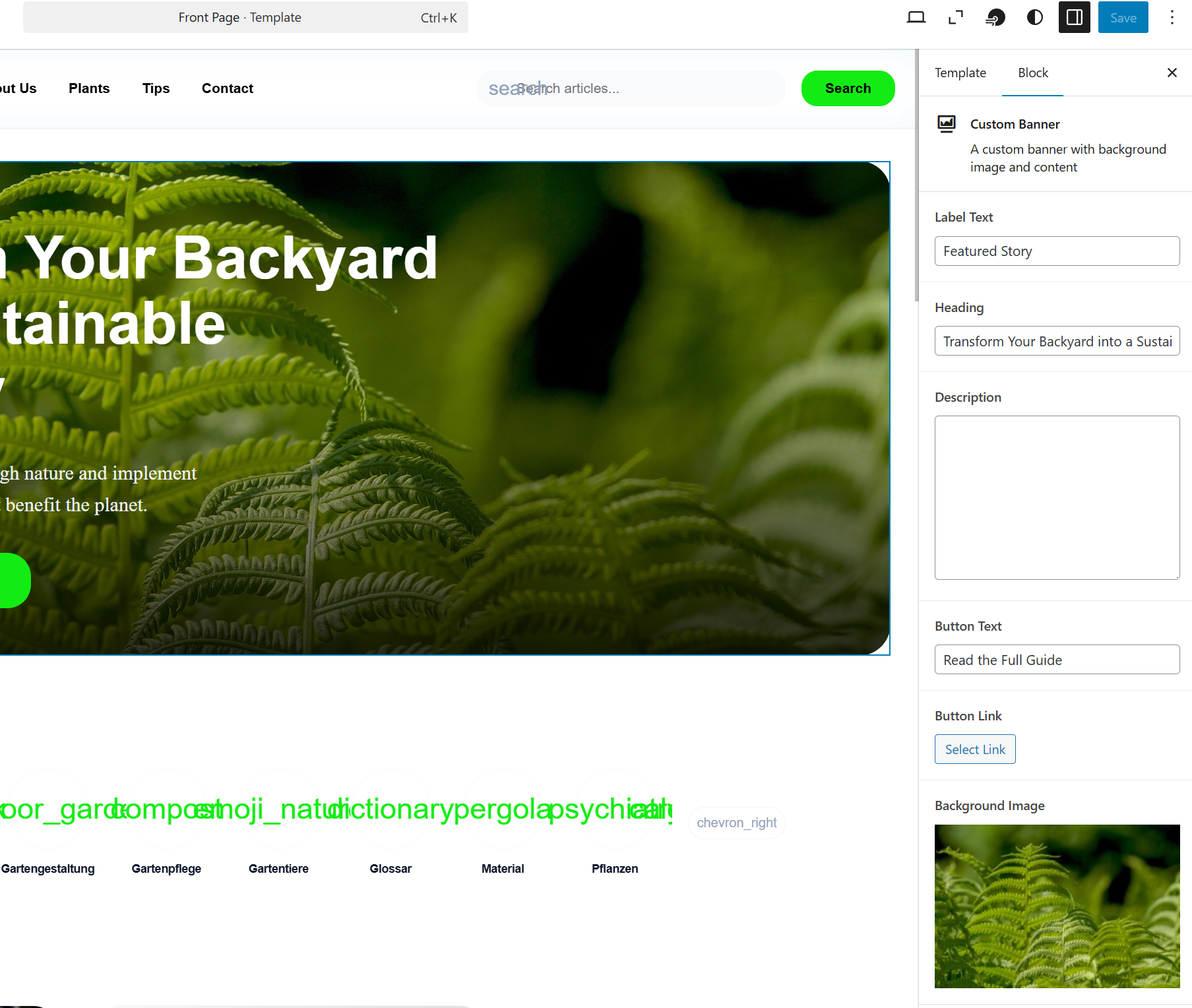
The site in the screenshot above is built entirely with Gutenberg and custom blocks. No page builder. No third party visual editor. Clean markup, fast load times, and a complete set of custom templates for every content type — all built natively in the WordPress block editor.
No Lock-in
Gutenberg is WordPress core. It is maintained by the same team that maintains WordPress itself. It will be updated alongside WordPress for as long as WordPress exists. There is no subscription, no vendor dependency, no risk of the tool being abandoned or acquired.
The content stored in Gutenberg blocks is clean HTML in the database. If you ever need to move away from a specific theme or block plugin, the content travels with you. It is not locked inside proprietary shortcodes.
Full Site Editing
Full Site Editing means your entire site — header, footer, page templates, global styles — is editable from a single interface using the same blocks you use for content. No Customizer. No separate theme options panel. No jumping between five different admin screens to make a design change.
This is a fundamental architectural improvement over how WordPress worked before and it is something no page builder can fully replicate because they are built on top of the old system rather than replacing it.
Custom Blocks
When a project needs something that does not exist in the core block library, you build a custom block. It integrates natively with the editor, looks and behaves exactly like any other block, and your client can use it without any special instructions.
This is the capability that puts Gutenberg in a different category from page builders. Page builders give you a fixed widget library with limited customisation. Gutenberg gives you a building system you can extend with anything you need.
The Honest Verdict
Elementor still makes sense in a narrow set of situations. A very simple site that needs to be delivered quickly and will never need to scale. A client who is already on Elementor with hundreds of pages of content and a working site where migration costs outweigh the benefits of switching.
For everything else — new builds, complex projects, performance-sensitive sites, sites that need to last more than two or three years without becoming a maintenance problem — Gutenberg is the right choice in 2026.
The performance difference alone is enough. A site that loads in under two seconds versus a site that loads in sixteen seconds is not a matter of preference. It is a measurable, rankable, user-affecting difference that has real consequences for your client's business.
Elementor was the right tool for a period when WordPress did not have a good native answer. That period is over.
Building a new WordPress site or migrating away from Elementor? Get in touch — this is exactly what I do.
Share this article